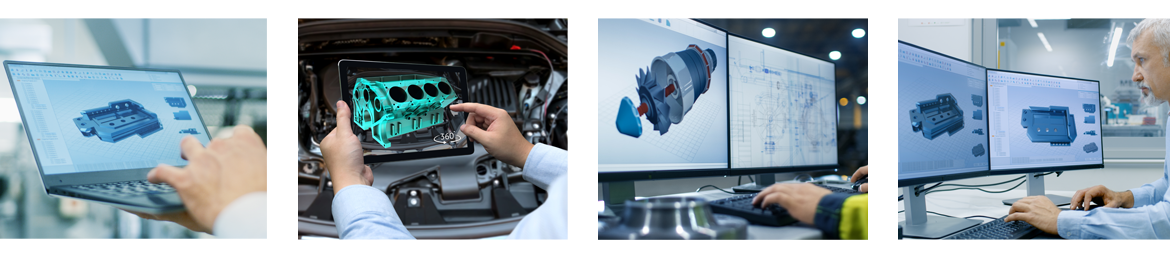
Maintenance, Repair, and Overhaul (MRO) operations are the cornerstone of aerospace reliability and safety. With global air traffic on the rise, maintaining aircraft efficiency has become critical to minimizing downtime and ensuring optimal fleet performance. Each hour an aircraft remains grounded represents not just financial loss but also logistical disruption for airlines. Hence, modern MRO practices play a pivotal role in preserving both safety and operational economy.
MRO involves continuous assessment, maintenance, and upgrading of aircraft systems to keep them airworthy and aligned with strict aviation standards. Beyond mechanical upkeep, it also drives technological adaptation, process optimization, and workforce excellence. As aircraft systems grow more intricate, technicians must continually upskill to match evolving demands. This is where efficient and advanced MRO training becomes indispensable - blending technical proficiency, procedural accuracy, and safety consciousness.
Today, digital technologies are redefining how maintenance professionals are trained. The introduction of Augmented Reality (AR) and Virtual Reality (VR) into MRO learning environments promises to revolutionize aerospace workforce training and overall operational readiness.
Contemporary aerospace MRO leverages a suite of advanced technologies that enhance precision, traceability, and decision-making. Connected maintenance systems gather real-time performance data from aircraft sensors, allowing predictive maintenance to identify potential issues before they disrupt flight operations. Maintenance management platforms now synchronize scheduling parts inventory, and documentation, ensuring unmatched operational clarity and compliance.
Highly detailed digital twins - virtual counterparts of entire aircraft systems - enable engineers to simulate wear, test component integrity, and experiment with parameters virtually. These simulations reduce the need for physical inspections and optimize resource allocation. Non-Destructive Testing (NDT) methods allow accurate evaluation of structural or material defects without physically dismantling assemblies, further enhancing efficiency.
Despite these technological strides, the effectiveness of MRO operations still depends heavily on human expertise. Traditional MRO training, often limited to lectures, manuals, and sometimes scarce hardware simulations, can create gaps between theoretical understanding and real-world application. New engineers entering the industry may struggle to visualize system complexity or gain sufficient practical exposure before handling live components.
This gap is where immersive technologies like AR and VR come in. They provide an interactive, cost-effective alternative that blends conceptual learning with hands-on experience. AR / VR-based tools simulate maintenance tasks in realistic conditions, enabling technicians to practice and refine skills safely. By doing so, these technologies are ushering in a smarter, safer, and more efficient era of aerospace maintenance and training.
Augmented Reality (AR) and Virtual Reality (VR) are transforming technical training across industries, with aerospace standing at the forefront of this evolution. While VR immerses users in a fully simulated environment, allowing them to interact with virtual aircraft and equipment, AR overlays contextual digital content - schematics, instructions, and visual cues - onto the physical environment. Together, they bridge the gap between learning and doing, offering intuitive ways to understand and execute complex procedures.
In a VR-driven environment, trainees can explore aircraft interiors, participate in simulated repairs, or perform entire maintenance procedures without physical risk. These environments replicate intricate spaces such as avionics bays, hydraulic systems, or composite assemblies, providing an authentic spatial understanding. Replays and step-by-step tutorials guide learners precisely through repair sequences.
Interactive and Scenario-Based Learning
Unlike static classroom education, AR / VR fosters scenario-based interactivity. Trainees are free to experiment, test their responses, and correct mistakes safely. Real-time system feedback helps reinforce procedural learning. Trainers can inject virtual “faults” into systems, allowing learners to practice accurate diagnosis and resolution - an invaluable skill in high-pressure maintenance environments.
AR / VR environments stimulate multiple senses, enhancing retention through practice-based repetition. Technicians trained via immersive simulation often transition more smoothly to live maintenance work, performing with greater accuracy and confidence.
With AR, experts across the globe can assist trainees or field technicians remotely. Through wearable or handheld devices, they can annotate, demonstrate, and guide maintenance activities in real-time. This feature is especially valuable for international MRO networks, where expert support may not always be physically available.
Efficiency, Scalability, and Flexibility
Training in AR / VR environments drastically reduces the need for physical mock-ups or dedicated simulator spaces. Software models can be updated instantly as new aircraft systems or regulations emerge, ensuring training material remains current. This makes AR / VR-based training highly scalable for global aerospace organizations that operate multiple fleets across regions.Data-Driven Training Analytics
AR / VR training platforms can log user performance - tracking completion times, accuracy, and compliance with procedure steps. This data, when analyzed, helps organizations assess skill readiness, customize learning modules, and establish measurable proficiency benchmarks for their maintenance teams.
Engineering Services Enabling the Next Generation of MRO Training
Developing powerful AR / VR solutions for aerospace MRO training requires deep synergy between engineering expertise, software innovation, and domain-specific understanding. This is where engineering services companies play a pivotal role, bridging real-world maintenance knowledge with state-of-the-art digital development practices. They do so by developing highly precise digital aircraft models for AR / VR environments, ensuring they mirror real-world conditions. They design integrated simulations that replicate actual maintenance procedures and fault scenarios, often connecting with existing management systems. Collaborating with trainers, they translate complex procedures into clear, interactive tutorials that meet strict industry standards. Their role also includes optimizing these systems for performance, stability, and user interaction through rigorous testing. Finally, they use trainee analytics for continuous refinement, ensuring the training evolves with new technologies and workforce requirements.
A trusted engineering services partner brings a balanced blend of technical rigour, software capability, and aviation safety discipline. Their contributions extend beyond mere tool development - they help organizations implement sustainable training ecosystems that evolve with the industry. Through collaboration with airlines, MRO operators, and aerospace OEMs, such companies help embed digital learning as an operational norm rather than a futuristic concept.