Oil refining and the broader process industries are integral to modern life, providing the foundational materials and energy sources on which most other sectors depend. Crude oil, a complex mixture of hydrocarbons, must undergo meticulous refining to separate and transform its components into fuels such as gasoline, diesel, and kerosene, as well as speciality chemicals and feedstocks for plastics and pharmaceuticals. Likewise, process industries including textiles, food, pharmaceuticals, and chemical production apply similarly sophisticated methods of purification, separation, and transformation to deliver consistent, high-quality products at scale. The efficiency, and environmental safety of these industries hinges on their ability to control complex reactions and flows, driven by intensive research, development, and operational expertise.
Piping layout design constitutes a cornerstone of both oil refineries and other process industries by directly influencing operational safety, efficiency, and maintenance. Piping networks serve as the circulatory system of industrial facilities, transporting diverse fluids, gases, and chemicals under varying temperatures and pressures. The conceptual phase of piping design involves mapping optimal routes and configurations for pipelines, taking into account geographic constraints, equipment locations, and accessibility for installation and maintenance. This planning phase becomes more intricate in remote or challenging environments, where terrain, climate, and regulatory constraints necessitate specialist knowledge and adaptive solutions. An effective piping layout ensures:
- Safety and Reliability: By minimizing the risk of leaks, fire, and corrosion, a good layout protects personnel and assets and supports system integrity in the face of high pressures and temperatures.
- Operational Efficiency: Optimized pipe routing and strategic grouping of high-temperature lines simplify expansion loop installation, reduce material use, and facilitate rapid inspection and maintenance.
- Maintenance Access: Careful arrangement allows for partial shutdowns or targeted repairs without halting the entire facility, enhancing uptime and serviceability.
- Space Utilization: Efficient use of space, including compact routing and pipe grouping, minimizes installation cost and enables future plant modifications or expansions.
- Interdisciplinary Integration: Layout engineers must coordinate with structural, electrical, and process professionals to prevent clashes, optimize supports, and ensure that instrumentation is readily accessible and protected.
Detailed engineering converts conceptual designs into comprehensive models and Piping and Instrumentation Diagrams, specifying every pipe, valve, support, and junction. This phase includes rigorous analysis, such as stress simulations and material selection, to ensure that the piping system performs reliably over a long lifecycle, even under demanding operating conditions. Furthermore, engineers must adapt layouts to comply with multifaceted regulations and standards that vary by country, region, and industry. India for example, has different piping norms than China, and engineers must be aware of this distinction. The significance of proper piping layout thus extends beyond construction: it directly shapes a facility’s safety culture, operational economics, and adaptability to technological change and market demand.
Engineering Tools in Piping Layout Optimization
Optimizing piping layouts necessitates leveraging advanced engineering tools, methodologies, and simulation environments. These tools are fundamental to transforming both conceptual and detailed designs into robust, implementable solutions that anticipate operational challenges, maximize efficiency, and maintain safety.
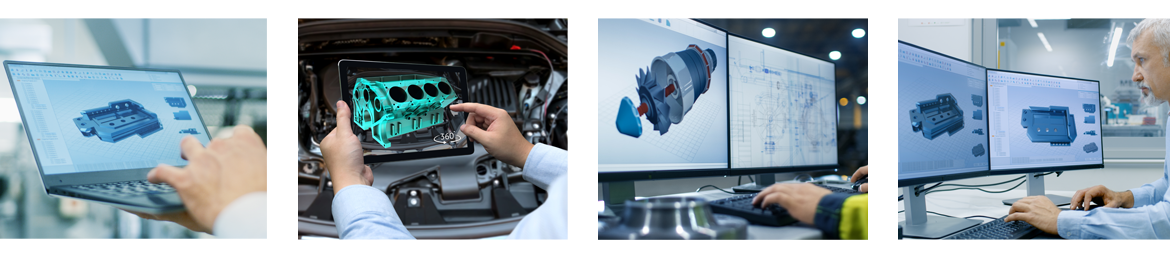
- CAD and 3D Visualization: CAD systems enable creation of precise digital models, allowing engineers to evaluate complex layouts in detail, perform clash detection, and ensure that pipes do not interfere with other equipment or structures. 3D visualization facilitates communication and coordination among disciplines, enabling real-time feedback and iterative refinement before actual installation.
- CAE and Simulation: CAE tools - like those from Altair - simulate thermal expansion, pressure, vibration, and fluid dynamics, assisting engineers in identifying stress concentrations, pressure drops, and optimal support placement. Simulations help predict how piping systems will perform over time, under varied loading conditions, and in emergency scenarios.
- Digital Twins and Data Integration: Digital twin modelling integrates as-built data, design specifications, and operational parameters. This allows for continuous monitoring, predictive maintenance, and optimization based on real-time analytics. By comparing simulated performance with actual conditions, engineers can refine system operation and pre-empt failures.
- Piping Stress Analysis: Specialized software is used to analyze and certify the piping system against vibration, temperature, seismic loads, and fluid dynamics, supporting compliance with national and international standards. Accurate stress analysis minimizes material overuse and underuse, enhances safety, and optimizes cost effectiveness.
- Documentation and Lifecycle Management: Engineering tools also generate design reports, maintenance manuals, and regulatory submissions, ensuring traceability and accountability throughout the lifecycle of the facility.
The deployment of these technologies streamlines project delivery, facilitates enhanced risk management, and enables innovative design solutions that would be unmanageable with manual calculation or outdated techniques. The result is that modern refineries and process industries operate at higher levels of uptime, lower cost, and greater adaptability, providing a substantial competitive advantage in demanding global markets.
Engineering service companies contribute strategic value to process industries and oil refineries by deploying expert teams and advanced methodologies to address complex design, execution, and operational challenges. These companies provide support across design, simulation, installation, commissioning, and long-term optimization, enabling client organizations to meet project goals efficiently and sustainably.
- Specialized Expertise: Engineering service providers possess deep domain knowledge in plant design, layout optimization, code compliance, and safety engineering.
- Resource Flexibility: They offer scalable resources, adapting teams and workflows to the size and complexity of each project – from greenfield sites to facility upgrades.
- Technical Excellence: By applying the latest engineering tools and practices, engineering services companies can deliver designs that are more innovative, safer, and cost-effective than those generated by in-house teams with limited specialization.
- Lifecycle Support: Services range from concept studies to as-built documentation, commissioning, process optimization, and vibration / stress analysis, enabling comprehensive lifecycle management and contributing to reliability and regulatory compliance.
- Efficiency and Responsiveness: Through collaborative workflows and best-practice methodologies, engineering service companies help clients handle evolving market needs, integrate new technologies, and respond effectively to changing regulatory environments.
The partnership between process operators and engineering service providers thus is not transactional - it is transformative, helping drive operational excellence, innovation, and sustainable growth.
Oil refining and process industries provide the backbone of industrial progress in India and elsewhere, converting basic resources into the fuels, chemicals, and materials. At the heart of these industries, piping layout design determines both safety and operational viability, shaped through rigorous planning and multidisciplinary collaboration. The rise of advanced engineering tools and simulation environments has fundamentally transformed how designers optimize and maintain these layouts. Engineering service companies amplify these benefits, providing the strategic expertise and technological support needed for sustained excellence in a fast-evolving industrial landscape. They ensure that oil refining and the process industries continue to meet global demands for energy and materials, while leading the way in safety, sustainability, and technological innovation.